How do you get veteran technicians to actually update a digital job board?
The board only works if the people turning wrenches keep it current. Here is what actually changes behavior in the bays, and what just creates resentment.
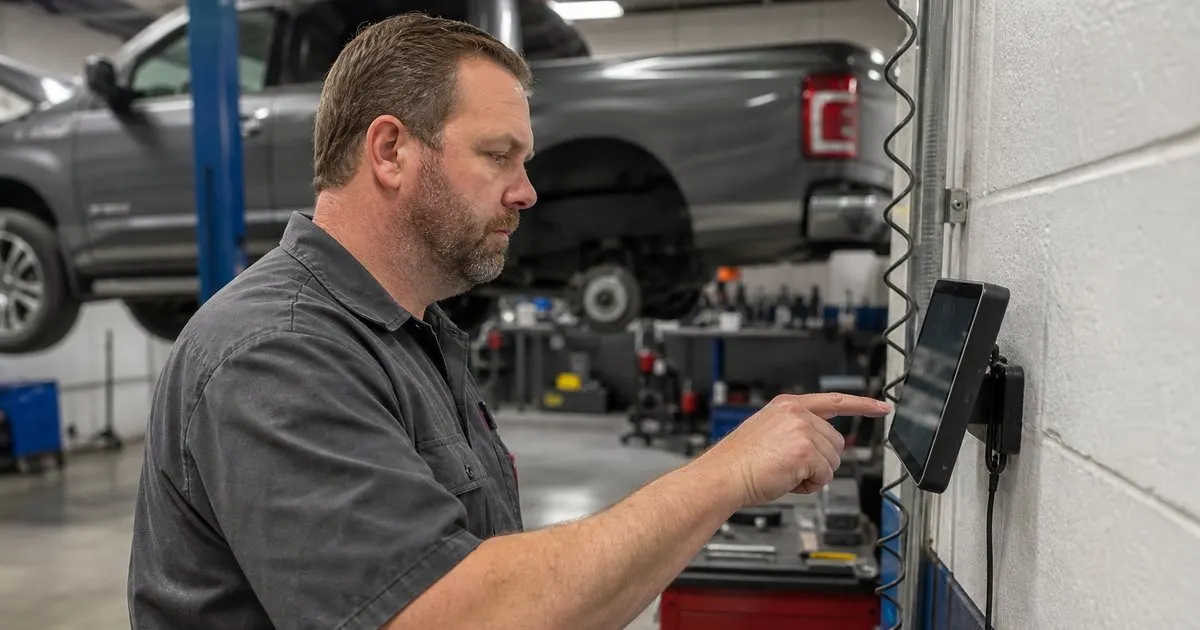
Understand why the board feels like a tax to a good tech
A veteran technician gets paid, formally or culturally, for cars fixed, not for data entered. Every minute at a screen is a minute not billing flat-rate hours, and if the previous three shop systems were abandoned within a year, the tech has learned that ignoring the new one is a reasonable bet. Add greasy hands, a tablet mounted in the wrong spot, and a login that times out, and the board becomes a chore that benefits the front counter, not the bay. Related: What is the best way to run a repair shop job board smoothly?
That is the real objection, and it is fair. The fix is not a pep talk about teamwork. It is making the update take less time than the interruption it prevents. A tech who marks a job as waiting on approval and never gets tapped on the shoulder about it again has just saved more time than the update cost. Until the tech experiences that trade personally, adoption will be grudging at best.
Keep reading: How do you keep customers informed about their car repair status all day?, What is the best way to run a repair shop job board smoothly?, Why do customers get frustrated waiting for auto repair status updates?. See how GarageTrackr helps you auto repair job board with live status for customers.
Cut the update down to one tap and put it within arm's reach
Every status change should be a single tap from the tech's view, with no typing required for the common cases. If the board asks for a note on every transition, techs will skip transitions. Mount a tablet or an inexpensive screen at the end of each bay, or on the toolbox, rather than one shared terminal by the office where a tech has to walk past three cars to reach it. Some shops use a phone in a pocket, which works as long as the app opens directly to the tech's own jobs.
Keep the tech's view minimal: their assigned vehicles, the current status of each, and the next action. Hide the customer contact history, the invoice, and the parts pricing from that screen. A tech wants to know what is mine, what is blocked, and what is next, and nothing else. The advisors can have the busy view. The bays should not. Related: How do you keep customers informed about their car repair status all day?
Make the board the only way to get attention
Behavior changes when the board becomes the channel that gets results. If a tech needs an approval and shouts across the shop, the advisor should say to put it on the board, and then actually respond quickly when it appears. If parts get pulled based on what the board says is next, techs will keep the board right so their parts are ready. The board earns trust by being the thing that moves work forward, not the thing that reports on it afterward. Related: When should a shop text a customer for approval on extra repair work?
The reverse matters too. Managers who check the board and then still walk the shop asking where things stand on the blue sedan are teaching techs that the board is theater. Ask the board first, and only go to the bay when the board does not answer the question. Within a few weeks the techs notice that a current board means fewer interruptions, and the updates start happening without reminders.
Start with one status, one bay, and one week
Rolling out every status to every tech on a Monday guarantees a messy Tuesday. Start with the transition that costs the shop the most when it goes unrecorded, usually diagnosis complete and needs approval, or vehicle ready. Ask one or two techs who are open to it to use only that transition for a week, and fix whatever annoys them before adding the next. Word travels fast in a shop, and a tech saying it is actually fine is worth more than any manager memo.
Once the habit holds, review the board in the morning huddle for two minutes. Any job with no status change in a day gets asked about, out loud. That light accountability keeps updates honest without anyone policing screens. Recognize the techs whose boards are accurate, quietly, in the ways that matter in your shop, whether that is first pick of the good jobs or simply being left alone to work. Related: Why do customers get frustrated waiting for auto repair status updates?
- Techs resist the board because it costs time and past systems failed; treat that as a design problem, not an attitude problem.
- Make every status change one tap on a screen within reach of the bay, with typing only for exceptions.
- Route approvals and parts through the board so keeping it current directly speeds up the tech's own work.
- Roll out one status with one or two willing techs first, then expand once they say it works.

Julien Jimenez
Julien Jimenez is an independent software builder based in Paris. He designs, ships, and operates focused SaaS products for small businesses and independent professionals. Read the full author page.
A Job Board Customers Can Follow
Auto repair job board with live status for customers. GarageTrackr is built to help you put this into practice.
Start free trialMore from the GarageTrackr blog

How do you keep customers informed about their car repair status all day?
What is the best way to run a repair shop job board smoothly?
Why do customers get frustrated waiting for auto repair status updates?
Get the GarageTrackr playbook
Practical guides on auto repair software, straight to your inbox as we publish them. No spam, unsubscribe any time.